 Australia
 Austria
 Belgium
 China
China
 Czech Republic
 Denmark
 Estonia
 Finland
 France
 Germany
 Greece
 Hungary
 India
India
 Ireland
 Italy
Italy
 Japan
Japan
 Kazakhstan
 Latvia
 Lithuania
 Malaysia
 Netherlands
 Norway
 Poland
 Singapore
 Slovenia
 Spain
Spain
 Sweden
 Switzerland
 Thailand
 UK
UK
 Ukraine





“Medicine used to rely largely on snapshots, but we’re now trying to view a patient’s entire medical history as if it were a movie,” explains Risto Renkonen, professor of glycobiology at the University of Helsinki and head physician at HUS.
Renkonen is leading the 100K Cancers research project, which launched in 2025 and is part of the Veturi programme driven by Orion Pharma and funded by Business Finland. The goal of the programme is to use data and artificial intelligence to accelerate medical research in Finland, particularly early-stage drug development.
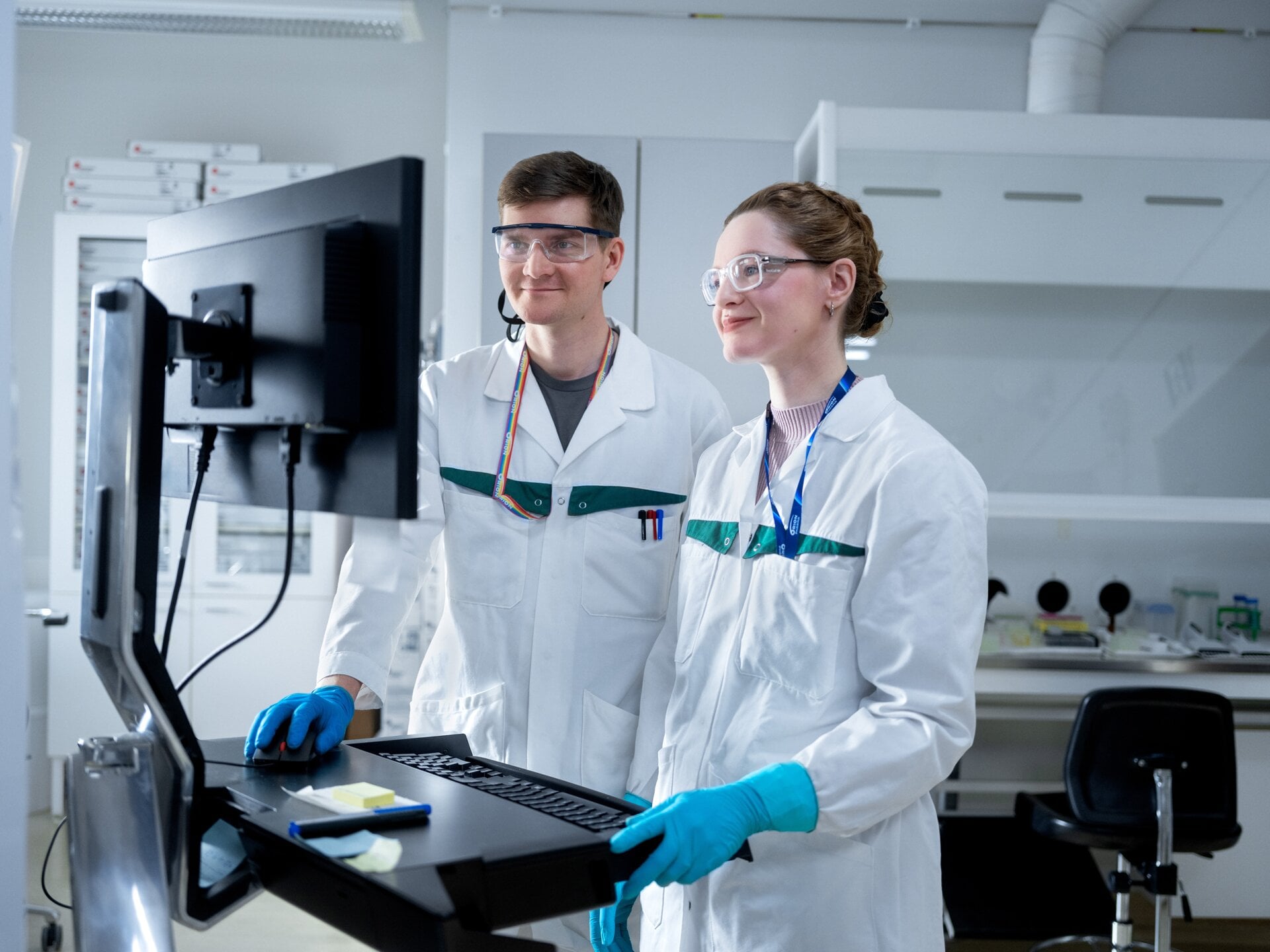
The 100K Cancers project uses data from 100,000 cancer patients collected from the HUS (Helsinki University Hospital) data pool.
“There is a vast amount of data – such as individual lab results – including measurement data for each patient throughout their entire care pathway. When we use AI algorithms to scale and enrich this data, we end up with a billion lab results.”
“It’s a treasure chest that can be used to start creating personalised predictive models,” Renkonen says.
More personalised cancer treatments are on the horizon
In the future, it may be possible to make an accurate prediction of a cancer patient’s treatment pathway as early as the initial stages of the disease.
“This would improve the targeting of care and provide opportunities to intensify or reduce treatments as needed. Right now, we have to choose medications and procedures based more on historical information than on data,” Renkonen explains.
“Using the research data, we can also simulate different scenarios – for example, whether the patient would have fared better with a different medication. Previously, there hasn’t been large enough dataset for this.”
Renkonen points out that the methods developed in the project are not limited to cancer; rather, they can be applied to the study of any group of diseases, provided there is sufficient patient data available.
National patient data in one place
Renkonen is also leading another Veturi programme project aimed at improving the use of patient data. The "Toward a Finnish Health Information Space" (Kohti suomalaista terveystietoaluetta) project aims to find ways to consolidate all Finnish patient data into a single system.
In addition to the University of Helsinki, HUS, and Orion, the project involves Tampere University Hospital and six companies in the pharmaceutical and health technology sectors. A wide range of actors, including other university hospitals, government agencies, research organisations, and patient advocacy groups, are also participating in the monitoring.
“The vision is that, going forward, all patient data will be readily available for research purposes. Research for the benefit of patients could be conducted as quickly and efficiently as possible,” he says.
Integrated health data also makes Finland more attractive to international pharmaceutical companies and medical researchers.
“Many countries are planning to integrate patient data, and it is important that Finland keeps pace with international developments. My hope is that, in time, we will also be able to create a shared data pool for the Nordic countries,” Renkonen says.
The research ecosystem includes more than 50 participants – and there’s room for more
The research ecosystem of the Orion Veturi programme, which launched in 2024, already includes more than 50 participants: universities, hospitals, research institutes, and companies.
“The ecosystem works together to develop innovative solutions for medical research,” says Tim Holmström, Director, Target Science and Project Strategy, R&D, at Orion.
As the programme leader, Orion is always involved in projects within the ecosystem, and 100K Cancers, for example, provides valuable insights into Orion’s oncology focus area.
“We bring a drug development perspective to the research and ensure that the findings ultimately lead to treatments for patients,” Holmström says.
An application is now being submitted to extend and expand the Veturi programme from early-stage research to cover the entire drug development value chain, all the way through to clinical trials and market launch.
“We’re always looking for more partners to join our ecosystem. We would love to hear how potential partners could help accelerate drug development through the use of artificial intelligence and digitalisation.”