
 Australia
 Austria
 Belgium
 China
China
 Czech Republic
 Denmark
 Estonia
 Finland
 France
 Germany
 Greece
 Hungary
 India
India
 Ireland
 Italy
Italy
 Japan
Japan
 Kazakhstan
 Latvia
 Lithuania
 Malaysia
 Netherlands
 Norway
 Poland
 Singapore
 Slovenia
 Spain
Spain
 Sweden
 Switzerland
 Thailand
 UK
UK
 Ukraine

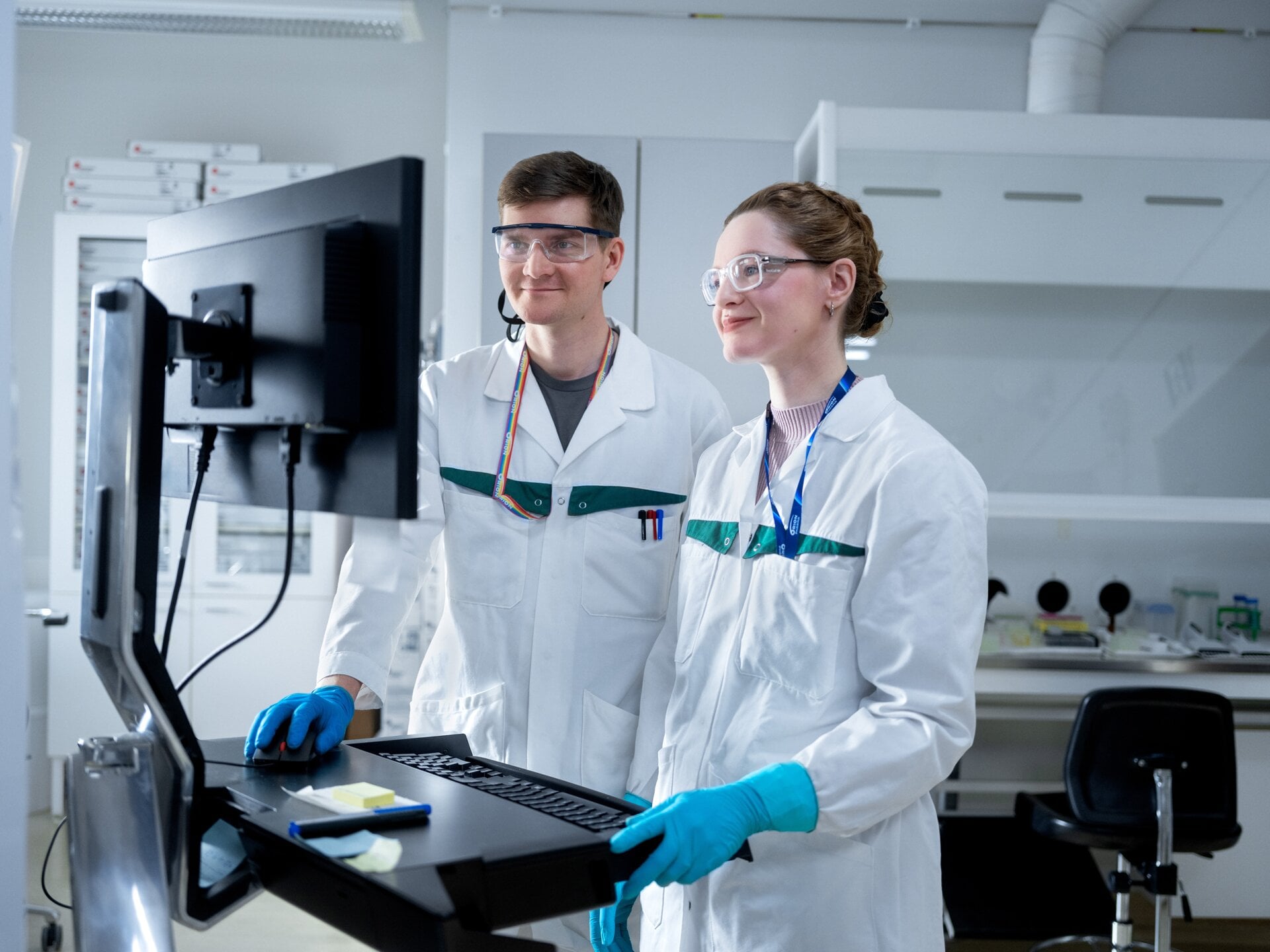



“We are in a fortunate position, having been able to follow the molecule's journey from an idea to a finished medicine. This is a researcher's dream,” say Anu Moilanen, Vice President, Oncology Research, and Olli Törmäkangas, Chemistry Lead, Medicinal Chemistry.
Moilanen is responsible for Orion Pharma's cancer research, and Törmäkangas leads the medicinal chemistry team.
Both played a central role when an androgen receptor inhibitor intended for the treatment of prostate cancer was discovered at Orion Pharma.
An unexpected biological finding
It all began in the early 2000s, Moilanen says.
“While studying the mechanisms of action of male sex hormones (androgens), we made an unexpected observation that helped explain why prostate cancer could become resistant to the treatments then in use,” she says.
“The key factor is the androgen receptor, which mediates the effects of male sex hormones in the body. If the number of receptors increases, the treatments no longer work as they should.”
Orion Pharma was not carrying out cancer research at the time, but the finding was too interesting to ignore.
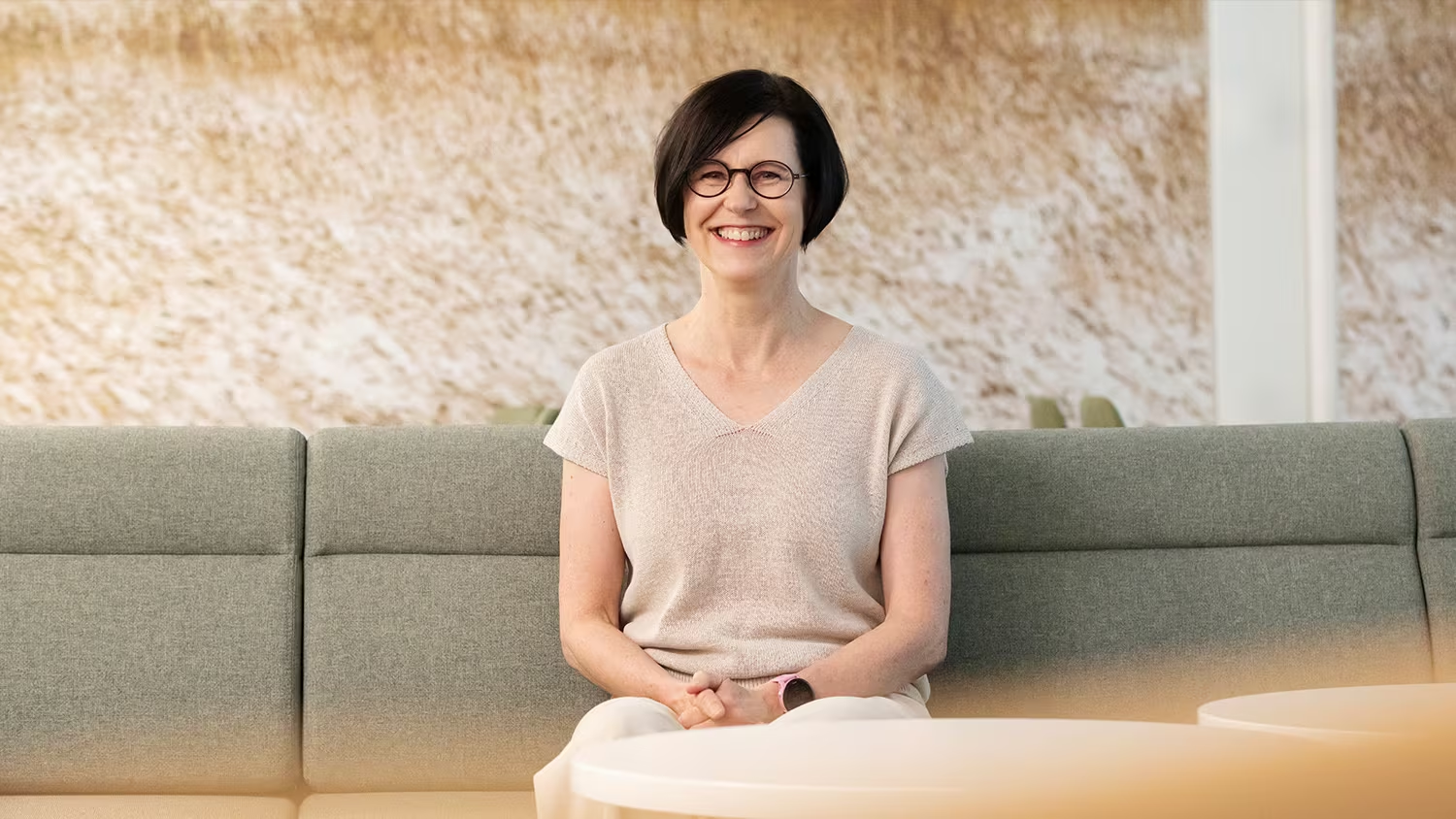
“Studies elsewhere in the world supported our observations too and strengthened our belief that we were onto something important,” Moilanen says.
The official drug development project was launched in 2005 – and Orion Pharma's work on cancer medicines continues to this day.
Developing a molecule of our own paid off
The search for a suitable starting point for the future prostate cancer medicine began by screening around one million virtual compounds.
On the basis of a unique protein model, the most promising compounds were ordered as physical samples for testing. The test results travelled back and forth between the chemists and the researchers examining the biology of the disease.
“We often sat down together, looked at the results and considered what further studies were needed and what modifications to make next,” Törmäkangas and Moilanen recall, looking back on a fruitful collaboration.
One option was to optimize the structure of a known drug molecule, but Orion Pharma decided to focus on novel molecular structures discovered internally.
This meant a greater workload and slower progress, but the approach paid off: it made possible both the long-term optimization of the molecule's properties and the protection of a unique invention with Orion Pharma's own patents.
The final drug molecule was ready in late 2008. Törmäkangas remembers the phase that followed as a particularly intense one.
“We began to produce the active substance (of the drug) in larger quantities, and the manufacturing process had to be optimized accordingly,” he says.
“At the same time, we carried out a comprehensive programme of toxicology and safety studies, the results of which were carefully documented for assessment by the regulatory authorities.”
Törmäkangas emphasizes that an enormous number of people took part in the project.
“Hundreds of people in different roles – and everyone's role was important,” he says.
“This could turn into something!”
In 2011, the molecule entered clinical trials. For the further development, Orion Pharma sought a collaboration partner.
The roles of Moilanen and Törmäkangas became smaller, but their connection to the medicine remained.
“It was terribly nerve-racking, wondering whether the models we had built would predict the behaviour of the disease well enough,” Moilanen says.
In early-phase clinical trials, cancer treatments are typically tested in patients who have few or no treatment options left. In these trials, the main focus is on the safety of the medicine and its behaviour in the body, as well as on finding a suitable dose.
In the first studies in humans, the observations matched what the research team had expected on the basis of its models.
“That was probably one of the most moving moments of the entire project. It gave us the feeling that maybe this really could turn into something,” Törmäkangas says.