
 Australia
 Austria
 Belgium
 China
China
 Czech Republic
 Denmark
 Estonia
 Finland
 France
 Germany
 Hungary
 India
India
 Ireland
 Italy
Italy
 Japan
Japan
 Kazakhstan
 Latvia
 Lithuania
 Malaysia
 Netherlands
 Norway
 Poland
 Singapore
 Slovenia
 Spain
Spain
 Sweden
 Switzerland
 Thailand
 UK
UK
 Ukraine




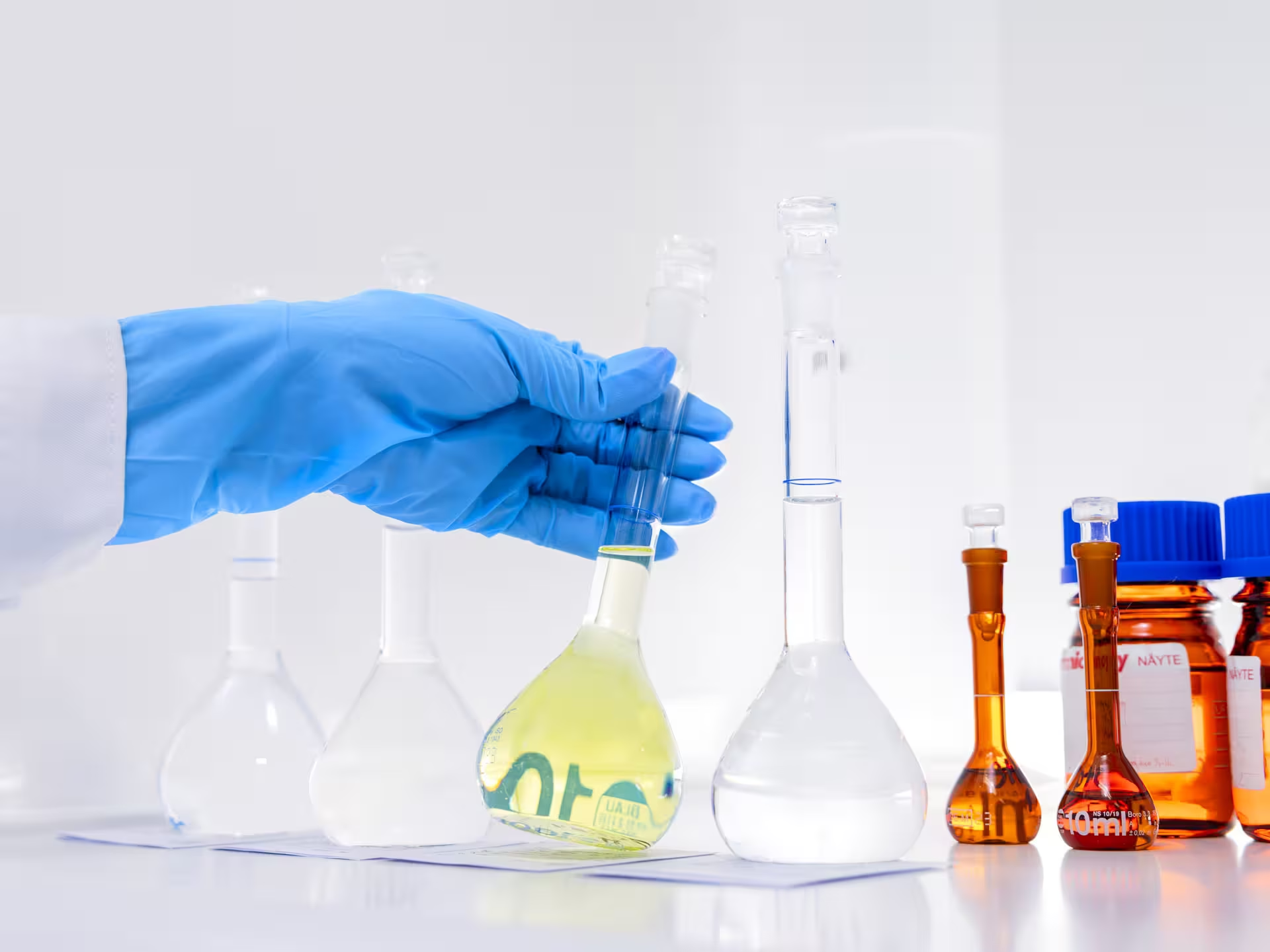




In 2020, Orion launched a systematic initiative to make its packaging more sustainable. First, the baseline situation was assessed, and then a strategy was created to promote more sustainable packaging. The strategy provides detailed guidance on how to ensure packaging is more sustainable and user-friendly.
“Packaging is an effective way to promote sustainability in the pharmaceutical industry. It is part of Orion’s ambitious Sustainability Agenda,” says Anna-Leena Hakoila, Development Manager, Primary Packaging Materials.
Product safety comes first
In Orion’s sustainability work, the carbon footprint of packaging is accurately calculated, and any changes to packaging materials are evaluated using data from the suppliers of the packaging material.
From Orion’s perspective, the most important aspects of packaging are always product safety and ensuring that the product’s properties are preserved properly throughout its shelf life. Therefore, every aspect of packaging must always be assessed from a practical perspective. For example, removing an outer carton from a product may increase the risk of breakage or make handling more difficult in pharmacies.
“Packaging is by no means sustainable if it leads to waste,” Anna-Leena Hakoila says.
Packaging redesigns have been launched for both prescription and self-care products, with some already visible to consumers.
Redesigning packaging as part of social responsibility
Kati Bergius, Senior Development Manager, Primary Packaging, has led the packaging redesign of Orion’s proprietary drugs used to treat neurological diseases. With careful planning of packaging, sustainability has been improved in several areas. The new bottles are expected to reach the market in mid-2026.
As part of the redesign, the old square bottles were discontinued. One key requirement for the new bottles was an easy-to-open tear-off closure that takes into account the challenges faced by the patient group. Since no suitable solution was available on the market, development work was carried out together with a supplier.
“Sustainability can also mean social responsibility. Easier opening improves accessibility and reduces the risk that the drug is not taken as directed,” says Kati Bergius.
The packaging redesign will have an impact throughout the supply chain:
- Bottle volumes have been reduced from 175 ml to as little as 75 ml.
- Lower water vapour levels inside the bottle will increase the product’s shelf life.
- Smaller bottles allow for smaller cartons, enabling more units per shipping case.
- The supplier of the packaging materials was changed from a US-based company to a Danish one, and in the future the materials will be transported to Finland by road.
- Multi-layer labels now contain product information in several languages, allowing for larger batch packaging and deliveries to more countries.
“Carbon dioxide emissions from transport will drop to about one fifteenth of the current level, mainly due to a significant reduction in air freight. Sourcing materials closer to home also improves security of supply,” says Bergius.
New tube materials
Orion is transitioning to recycled materials in aluminium tubes. According to calculations by the tube supplier, using recycled aluminium can reduce the carbon footprint of the tubes by up to 70%.
“This is the first time we are using recycled material as a product-contact material. Aluminium is an excellent material because it can be recycled endlessly, and even when recycled it meets strict quality requirements,” says Anna-Leena Hakoila, who is leading the initiative.
“At the moment, the biggest challenge in reducing the use of virgin raw materials in packaging is the availability of recycled materials that meet regulatory requirements.”
Another major change related to recycled materials is already planned: switching to recycled plastic in the packaging of emollient creams. This will be combined with material reduction by thinning the walls of the tube and lowering cap height.