
 Australia
 Austria
 Belgium
 China
China
 Czech Republic
 Denmark
 Estonia
 Finland
 France
 Germany
 Hungary
 India
India
 Ireland
 Italy
Italy
 Japan
Japan
 Kazakhstan
 Latvia
 Lithuania
 Malaysia
 Netherlands
 Norway
 Poland
 Singapore
 Slovenia
 Spain
Spain
 Sweden
 Switzerland
 Thailand
 UK
UK
 Ukraine



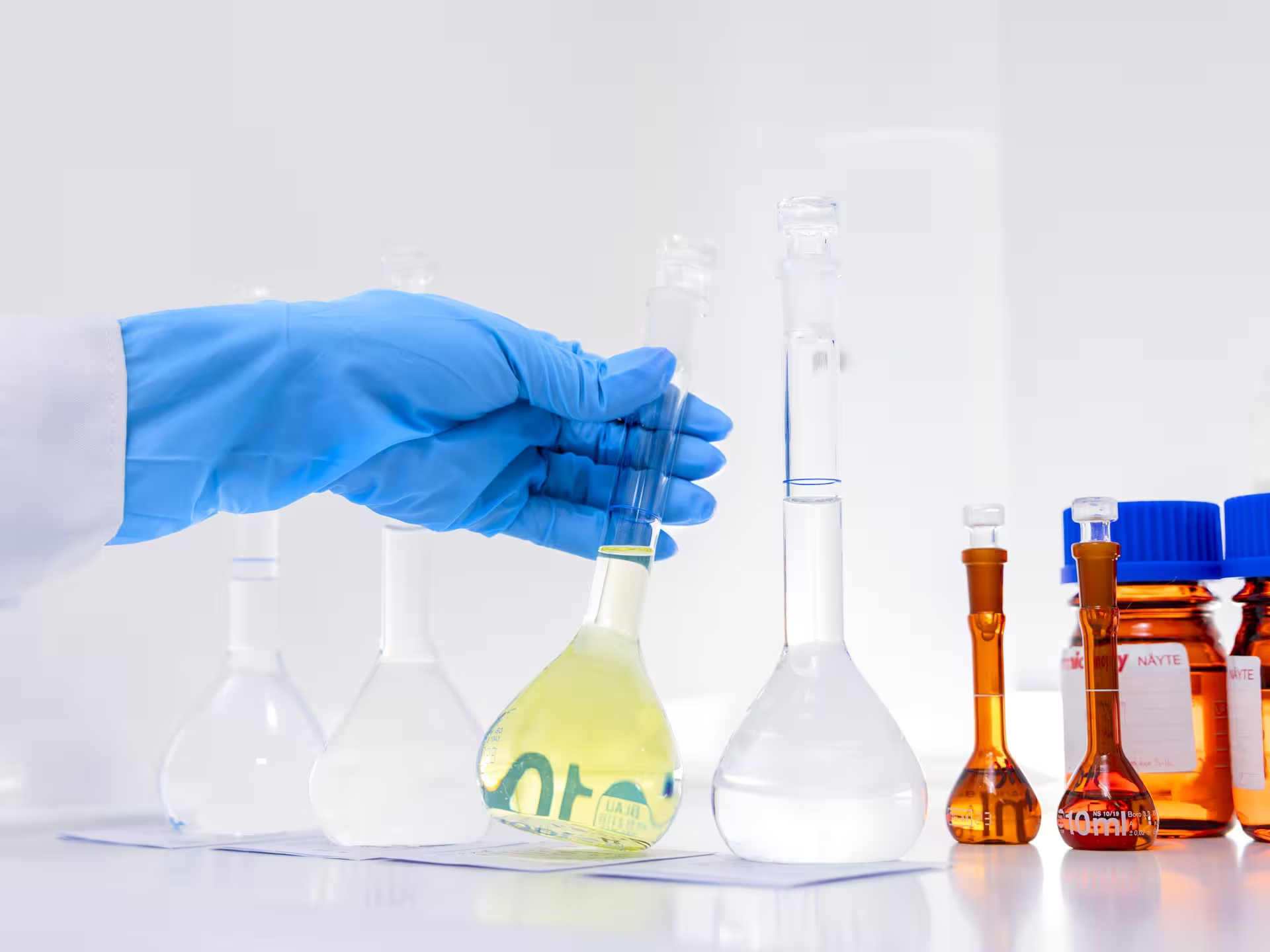



The production processes at Orion’s Turku factory will henceforth operate carbon free. Completed in March 2026, Orion’s new steam plant produces steam for the Turku factory area electrically, reducing CO₂ emissions from production by 1,800 tonnes per year.
“The largest emissions from pharmaceutical manufacturing arise from energy utilities: heat consumed by buildings and operations, and steam required to maintain process conditions. Reducing the use of utilities is extremely difficult, which is why emissions reductions require investments. These projects help us as a company to achieve our science-based climate targets,” says Juhani Kankaanpää, Executive Vice President, Global Operations, who is responsible for Orion’s global supply chain and production.
Already in 2021, Orion commissioned a heat pump plant in Turku that produces thermal energy and cooling for production facilities and utilises waste heat. In addition, all electricity purchased by Orion, accounting for 45% of the company’s total energy consumption, has been carbon free since 2019. In Turku, only residual emissions that are difficult to reduce remain, related to refrigerants and backup fuels.

Juhani Kankaanpää speaking at the Mayor's Climate Meeting in Turku, Finland, on 8 April 2026. Photo: Heikki Räisänen.
Reducing the use of utilities is extremely difficult, which is why emissions reductions require investments. These projects help us as a company to achieve our science-based climate targets.
Orion produces one billion tablets a year in Turku – investment also supports the city’s climate targets
Orion is part of the City of Turku’s climate team and has now also signed the city’s climate commitment. Since 2022, the City of Turku has participated in the EU Mission for 100 Climate-Neutral Cities, and the city aims to achieve carbon neutrality by 2029. Orion’s investments support the achievement of the region’s climate targets.
Turku is one of the significant pharmaceutical competence hubs in Finland and Northern Europe. Orion’s Turku site is the company’s second largest, and Orion employs around 800 people in Turku. In addition to the pharmaceutical factory, Orion’s operations in Turku include a large research and development centre as well as teams in sales, marketing, procurement, and IT.
“At the Turku factory, we manufacture around 90 different product brands, including cytostatic cancer medicines, painkillers, medicinal ointments, hormone replacement therapies, as well as all Orion emollient creams. Each year, the factory produces one billion pharmaceutical tablets and one thousand tonnes – or one million kilograms – of ointments and gels,” Kankaanpää says.
Going forward, the production processes for this output will operate carbon free.
Orion’s climate work is guided by the latest climate science and value-chain thinking
Orion has set science-based climate targets, under which the company is doing its part to limit global warming to 1.5°C.
With regard to its own operations and purchased energy, Orion commits to reducing absolute Scope 1 and 2 greenhouse gas emissions by 70% by 2030 compared to the 2023 baseline. The Turku steam plant is one of the key measures supporting the achievement of this target. By the end of 2025 – i.e., before the steam plant was commissioned – 31 percentage points of the 70% target had already been achieved within two years.
The greatest climate impacts across Orion’s entire value chain are related to purchased raw materials, packaging materials, active pharmaceutical ingredients, and finished products. In 2025, Orion launched a supplier engagement programme targeting its highest-emitting suppliers, through which Orion provides support and shares best practices and technical expertise to help suppliers reduce their own emissions.
“As part of the programme, we encourage and support our highest-emitting suppliers to also set their own science-based climate targets,” Kankaanpää says.

