
 Australia
 Austria
 Belgium
 China
China
 Czech Republic
 Denmark
 Estonia
 Finland
 France
 Germany
 Hungary
 India
India
 Ireland
 Italy
Italy
 Japan
Japan
 Kazakhstan
 Latvia
 Lithuania
 Malaysia
 Netherlands
 Norway
 Poland
 Singapore
 Slovenia
 Spain
Spain
 Sweden
 Switzerland
 Thailand
 UK
UK
 Ukraine









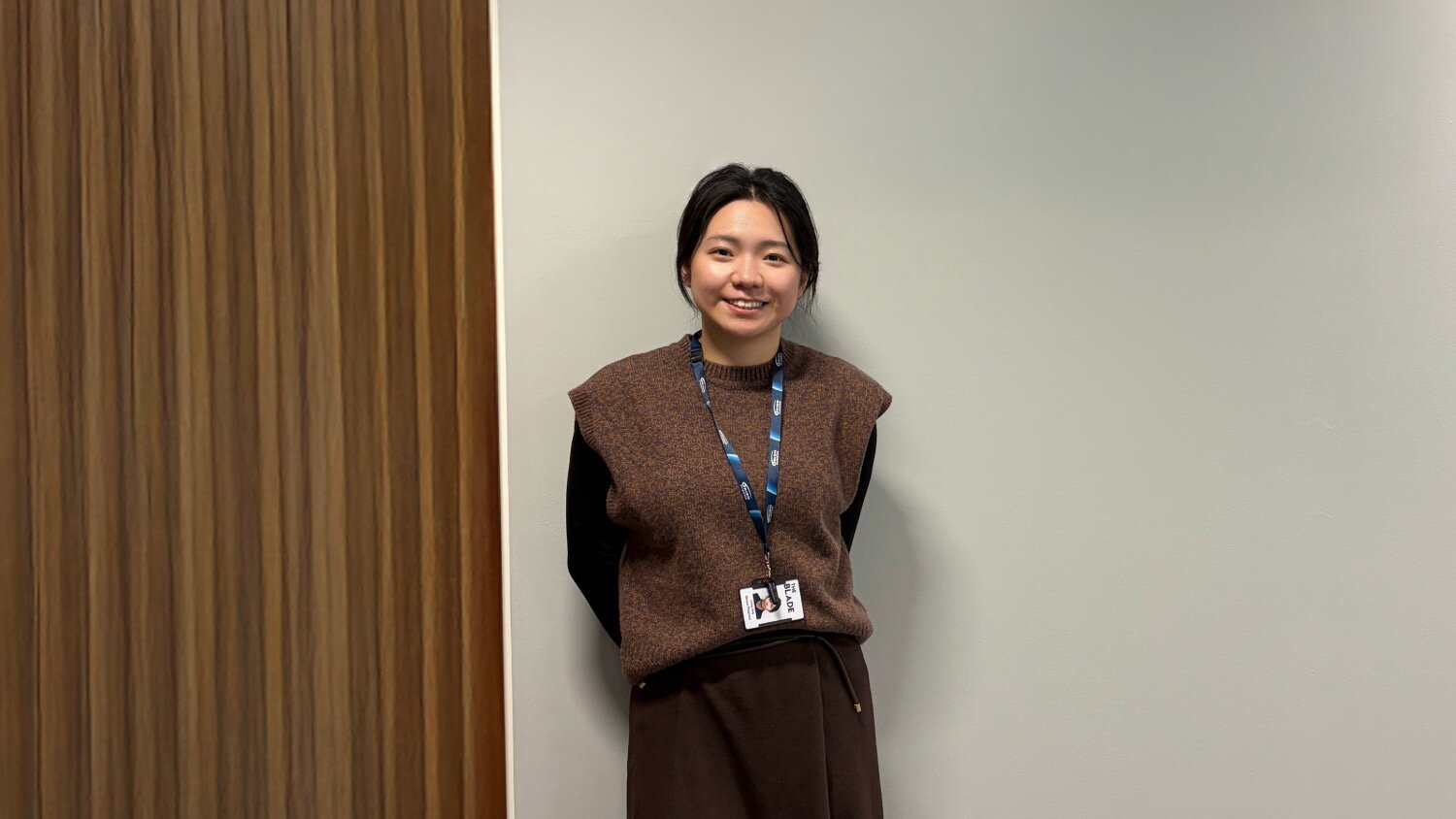
Yuting Jiang
- Medical Affairs Specialist
- Works in Orion's UK medical team, providing medical and scientific expertise to support the business.
- Master of Pharmacy
How did you get into the pharmaceutical industry?
I studied pharmacy in the UK, where the typical career paths lead to hospitals, community pharmacies, or GP surgeries. I knew I wanted something different.
In my first year, I attended an event where someone spoke about careers in the pharmaceutical industry. It stuck with me, and eventually I decided to pursue that path.
What does your role at Orion involve?
The work is genuinely varied. At the core of it is responding to medical enquiries: making sure that answers are scientifically accurate and comply with regulatory requirements.
I'm also involved in pharmacovigilance and quality processes, including adverse event reporting.
Beyond that, I work with stakeholders and healthcare professionals to deepen our understanding of how products are used in practice and where we can better address unmet treatment needs.
I have a particular interest in women's health. I've seen some of the challenges that exist in this space, and I want to understand them better.
What does your pharmacy background bring to the role?
Pharmacy gives you a solid clinical foundation, which means you can get up to speed on new therapy areas relatively quickly. It also gives you a grounded understanding of healthcare and how treatment works in the real world.
The attention to detail that comes with a pharmacy background is invaluable when working with detailed medical content and ensuring regulatory compliance.
What excites you about your work right now?
I'm still early in my career, so I really value the opportunity to learn from more experienced colleagues and build expertise across different therapy areas.
I have a particular interest in women's health. I've seen some of the challenges that exist in this space, and I want to understand them better.
What would you say to a pharmacist thinking about a career in the pharmaceutical industry?
The pharmaceutical industry opens up far more than medical roles for pharmacy graduates. You could find yourself working in quality, pharmacovigilance, marketing, or sales. It's worth exploring the options with an open mind.
Siiri Mäkelä
- Public Affairs Specialist and Secretary to the Orion Research Foundation
- Works in public affairs, monitoring and anticipating changes in the pharmaceutical policy environment.
- Master of Pharmacy; Master of Administrative Sciences

How did you get into the pharmaceutical industry?
I became interested in pharmaceutical policy during my pharmacy studies – I wanted to understand how decisions affecting the industry are made. I studied administrative sciences alongside pharmacy and had the chance to observe pharmaceutical policy and decision-making first-hand through work placements.
When I got onto Orion's Phase1 trainee programme for university students, I knew immediately that this was the right place for me.
What does your role at Orion involve?
I maintain contact with a range of stakeholders and follow daily developments at EU level, in Finland, and internationally.
Some of what I do is tied to long-running legislative processes, but there's also plenty of work that requires a rapid response, like drafting statements and position papers at short notice.
I also manage the day-to-day operations of the Orion Research Foundation.
The world is changing rapidly. My working days are anything but monotonous.
What does your pharmacy background bring to the role?
I understand the pharmaceutical operating environment: how medicines are developed, what the regulatory landscape looks like, and why medicines are not ordinary consumer goods.
That said, I've also had to consciously let go of the pharmacist's instinct to focus on fine detail. In this role, it's essential to be able to step back and look at the bigger picture.
What excites you about your work right now?
I'm still at the beginning of my career and genuinely enjoy learning. It helps that Orion actively encourages professional development.
My work connects directly to current events and fast-moving situations. The world is changing rapidly, and my working days are anything but monotonous.
What would you say to a pharmacist thinking about a career in the pharmaceutical industry?
I can wholeheartedly recommend the pharmaceutical industry as a place to work. The opportunities are varied, and the work extends well beyond traditional pharmacy roles.
It's worth developing your skills in the direction that genuinely interests you. An unconventional background or an unusual mix of experience can turn out to be a real asset.
Henri Salokangas
- Director, Easyhaler & Respiratory Business
- Leads the respiratory business area, with responsibility for sales development, commercial performance, and strategy.
- Master of Pharmacy, MBA; studied in the UK

How did you get into the pharmaceutical industry?
It happened gradually, really. I had an interest in the natural sciences and studied pharmacy in England. During my studies I was drawn to both hospital work and the pharmaceutical industry.
A summer placement at Orion settled it. Industry felt like the right fit, and I applied for a permanent role after graduating.
What does your role at Orion involve?
I'm involved in everything that matters to the business. I work across manufacturing, R&D, quality assurance, and sales, always keeping the commercial picture in view.
Because the business is international, I travel regularly to meet customers and colleagues in different markets. That's one of the best ways to understand what's actually happening on the ground.
I've moved from one role to the next, building expertise as I've gone. That's why I'm still here after nearly 20 years.
What does your pharmacy background bring to the role?
A Master of Pharmacy gives you a strong foundation: you have a thorough grasp of the pharmaceutical world. I understand how medicines act in the body and what developing a medicine entails.
Scientific and technical knowledge is difficult to acquire purely on the job. Commercial understanding, by contrast, is something you can build up through experience in business-facing roles.
What excites you about your work right now?
The international dimension of the work is energising. It's fascinating to see that even though markets differ considerably, they often operate according to the same underlying logic.
The business is in strong growth, and we're developing it with real purpose. We've invested in key markets and increased our capacity.
What would you say to a pharmacist thinking about a career in the pharmaceutical industry?
The pharmaceutical industry offers pharmacy graduates a remarkable range of directions to take. Paths lead into R&D, manufacturing, and commercial roles, among others. You can build your career step by step and you don't need to have everything figured out from the start.
I've had the opportunity to take on many different roles at Orion. I've moved from one position to the next, building expertise along the way. That's why I've been happy at the same employer for nearly 20 years.
Ilkka Isolatva
- Production Manager
- Works as production manager for tablet manufacturing, with responsibility for departmental operations and staff management.
- Bachelor of Pharmacy

How did you get into the pharmaceutical industry?
After graduating I worked as a pharmacist in a community pharmacy. But I came to realise that the pharmaceutical industry offers the chance to do very different kinds of work with the same qualification.
A vacancy at Orion caught my eye, and the role looked interesting. I also had a positive impression of Orion as an employer.
What does your role at Orion involve?
My job is to make sure that production is safe, high-quality, and efficient. I manage a team of supervisors and specialists, and much of the work involves day-to-day leadership, communication, and coordinating across different areas of the operation.
The role also includes ongoing development work related to safety and quality, as well as ensuring that things run smoothly.
Your own background – even an unusual mix of experience – can turn out to be surprisingly valuable.
What does your pharmacy background bring to the role?
I understand how medicines behave and the underlying chemistry involved. Having a clear picture of the medicine manufacturing and supply chain makes it easier to grasp the broader operation and the value chain. This is particularly useful when dealing with deviations, which need to be examined from several different angles.
The training also reinforces a quality mindset. I'm well placed to assess what matters and where to focus attention.
What excites you about your work right now?
I'm particularly engaged by the development work we're doing to support day-to-day management. We've been building a tool that makes supervisory work and decision-making more visible and more streamlined. It's genuinely interesting to see how it performs in practice.
What would you say to a pharmacist thinking about a career in the pharmaceutical industry?
The pharmaceutical industry has a place for people with many kinds of expertise and background.
So be confident in who you are and stay open to new opportunities. Your own background – even an unusual mix of experience – can turn out to be surprisingly valuable.


