
 Australia
 Austria
 Belgium
 China
China
 Czech Republic
 Denmark
 Estonia
 Finland
 France
 Germany
 Greece
 Hungary
 India
India
 Ireland
 Italy
Italy
 Japan
Japan
 Kazakhstan
 Latvia
 Lithuania
 Malaysia
 Netherlands
 Norway
 Poland
 Singapore
 Slovenia
 Spain
Spain
 Sweden
 Switzerland
 Thailand
 UK
UK
 Ukraine




The global security situation has changed rapidly. Geopolitical tensions, conflicts, and superpower rivalry are increasingly manifested in the daily operations of businesses as supply chain disruptions and increased uncertainty in trade and investments.
In the pharmaceutical industry, these impacts are felt on a practical level as the entire value chain from active pharmaceutical ingredient (API) procurement to production, research and markets is global.
In this altered operating environment, Orion and CMI have established a partnership that aims to increase open dialogue on crisis prevention and long-term peacebuilding.
“Strengthening stability, trust and cooperation has become increasingly important for the resilience of societies. By focusing on these aspects, we also support the work of both Orion and CMI,” says Orion’s Head of Public Affairs, Lotte Bruns.
Health, stability and peace are interconnected
Functioning healthcare and the availability of medicines are a cornerstone of a stable society. When people have access to healthcare and functioning basic services, trust toward society increases.
“The more stable a society is, the better it is at withstanding crises. Issues can then be approached in a constructive manner, and they do not escalate into violence,” says CMI’s Deputy CEO Hanna Klinge.
Escalating conflicts can easily erode societal structures: healthcare deteriorates, the availability of medicines is hindered, and the population’s well-being suffers. This can result in a vicious circle that further deepens the crisis.
Uneven access to healthcare services can also increase the feeling of inequity and undermine social stability. Due to this, functioning healthcare is not only a matter of well-being, but an essential part of a secure and resilient society.
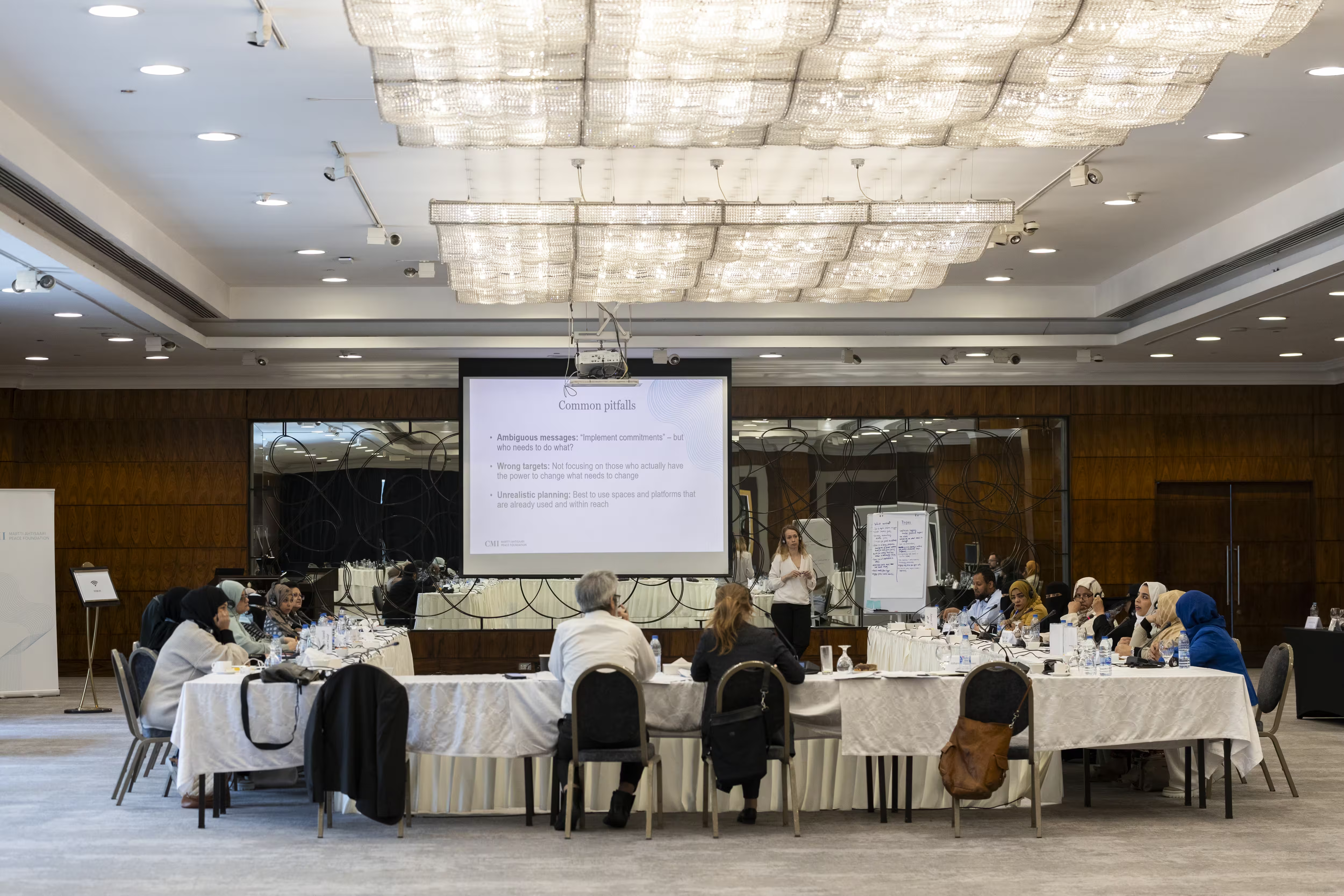
It takes a diverse group to build lasting peace. Financial and business actors have an increasing role in this.
Resilience is built in times of peace
Price competition has caused a significant part of pharmaceutical production to be moved outside Europe. Up to 80 per cent of APIs and 40 per cent of finished medicines come from Asia.
Geopolitical tensions and dependencies on global supply chains have increased Europe’s vulnerability. In fact, the EU is currently building a new regulatory framework to ensure the availability of critical medicines.
The availability of medicines and security of supply are based on structures created during times of peace. Appropriate and predictable regulation, versatile supply chains, reliable partners, and sufficient production capacity increase the resilience of healthcare systems.
“Orion has a particular role here, because we are one of the few pharmaceutical companies in Europe that manufacture generic medicines for the treatment of public health diseases. We also produce strategically important APIs in Finland,” Bruns explains.
Daily acts of peace are key
Building peace is not just about diplomacy or solving crises. Above all, it is based on open dialogue, increasing trust and enabling inclusion.
“In the end, the underlying universal principles are quite simple. The same logic works in both conflicts and daily interactions,” Klinge says.
It is important to transfer the focus from solving conflicts to preventing them, because many tensions arise in human interaction. When everyone can trust that they will be able to express their views and participate in decision-making, there is a chance that conflicts get solved before they escalate into crises.
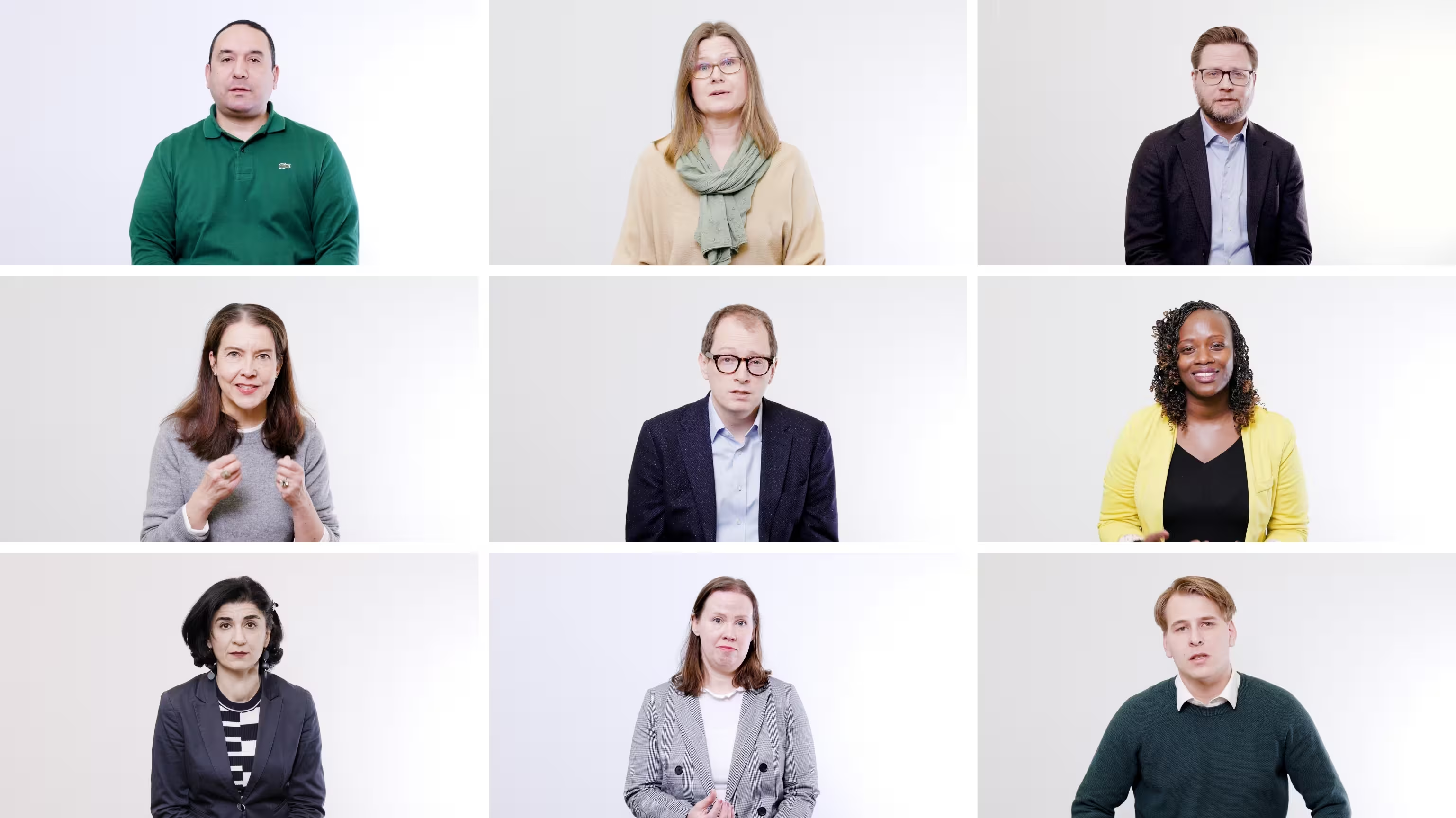
A tangible product of the partnership is the Prescription for Peace video series, in which CMI’s experts explain the key practices of peacemaking, and their significance in tense situations.
“Our aim is to make peacebuilding principles understandable and bring them into wider use. I believe that they are also useful in the corporate world,” Klinge says.
In Finland, people’s opportunities to participate and make a difference have traditionally been emphasised. It is even more important to strengthen these principles when views are diverging.
“The Nordic welfare state has largely been built on trust and cooperation,” Bruns says and points out that Orion’s responsibility for maintaining stability is also increasing in the changing world.
From antagonism to dialogue
The collaboration between Orion and CMI is not an individual campaign, but rather a conversation opener. The aim is to emphasise the importance of prevention and long-term thinking, as well as to increase awareness of the connection between health, stability, and security.
Attention should be focused on the manner societal challenges are discussed.
“These days, dialogue tends to be conflict-based. We want to bring in another perspective; one of peacebuilding in the long term that’s based on dialogue, trust and inclusion,” Bruns explains.
She emphasises that this does not mean diminishing issues around security – quite the opposite. Investing in defence is necessary, but it is also good to remember that we have other competencies as well.
“It takes a diverse group to build lasting peace. Financial and business actors have an increasing role in this,” Klinge reminds us.
She believes that collaboration with Orion will expand the discussion and introduce new audiences to CMI’s expertise.
In the end, it is about what kind of future we are building. The tone of the discussion matters. What we talk about affects the decisions we make and the world we will see in the future.


